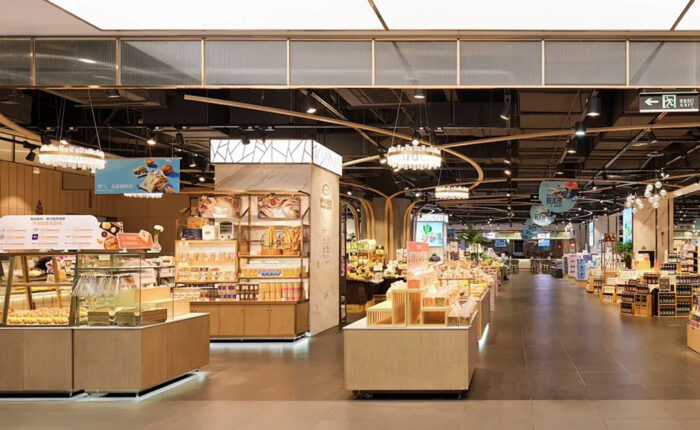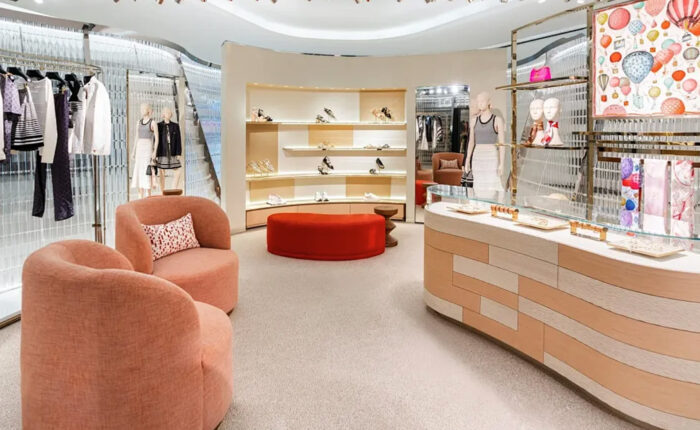

The design offers a high degree of freedom, creating a strong sense of situational atmosphere. It can present complex and diverse visual effects, fully showcase the theme, and effectively exhibit brand culture. The design also maintains strong confidentiality regarding the interior layout and merchandise, making it suitable for creating VIP services.
If the eyes are the windows to the soul, then the window is undoubtedly the eyes of space.
It possesses a certain degree of transparency and breathability, allowing for the display of some store elements while concealing others. It is relatively easy to create a story theme and a scenic atmosphere. Small shops are also suitable for this design, and the time and cost for design and layout are relatively low. There are no restrictions on the shape of the partition wall, making it easier to design and create unique store features.
Hermès skillfully integrates its products into highly creative artistic settings.
It is more practical and has a wider range of applications; it allows customers to understand the store more intuitively and directly; it is most suitable for small shops or small display windows, saving space while achieving a good effect.
Create a sense of depth and visual drama, making good use of the corner positions.
This type of window display is suitable for cosmetics stores, jewelry/accessory stores, and luxury brand stores. Since these products are small and exquisite, displaying them in a normal-sized window would make it difficult to effectively showcase their effect and highlight their value. Therefore, focusing on displaying them in a small space allows customers to notice them at a glance. Moreover, it can more intuitively and emphatically showcase the selling points and quality of the products. Usually, only one person can view them at a time, which subtly helps create a sense of “emotional attraction” between the customer and the product.